
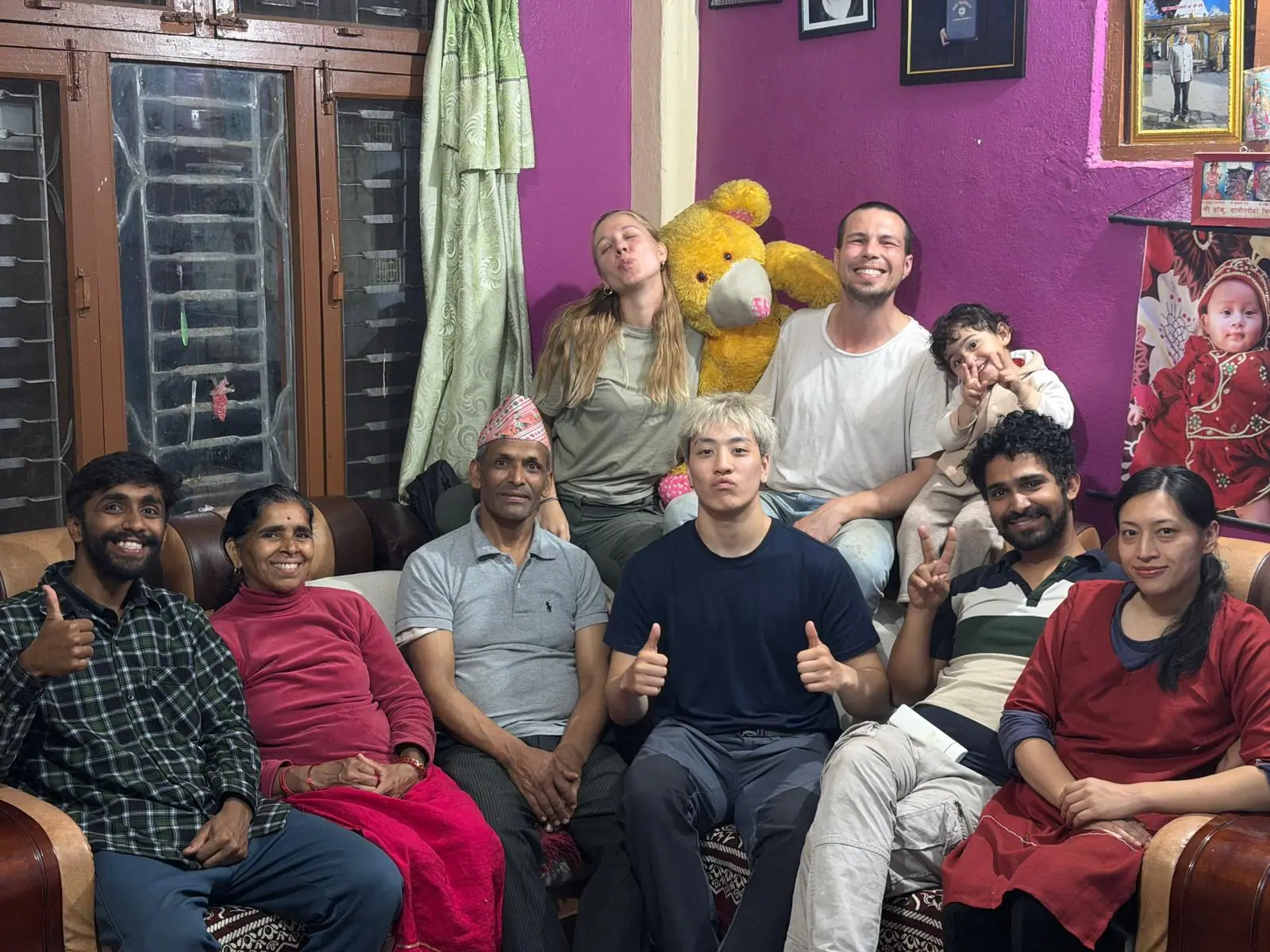
Pokhara has two reputations: the lakeside strip of cafés and paragliding take-offs, and the rice terraces and lemon orchards that begin where the last hotel ends. Farm volunteering happens in the second one. This guide covers how to volunteer on a farm in Nepal — the platforms that list real hosts, the visa you need, what a working morning looks like, what it should cost, and how to tell a genuine family farm from an arrangement that quietly exploits your enthusiasm.
Workaway, WWOOF, or direct: three routes to the same farms
Three routes lead to farm volunteering in Nepal, and they overlap far more than their marketing suggests. Workaway and Worldpackers are broad work-exchange directories where a farm sits beside a hostel or a family; WWOOF is agricultural only and run through national organisations — WWOOF Nepal charges about US$40 a year for one person and US$60 for a pair, and hosts there list for free. All three take a single annual membership of roughly US$40 to US$70, and none takes a cut from the farm, which is why the same family often appears on two sites at once.
The third route is going direct. Plenty of families around Pokhara have no listing at all — they are found through a message to the farm's own website or WhatsApp. Direct booking costs nothing beyond the stay itself and puts hours and meals in writing between you and the family. If you would rather skip the membership fee, you can apply for farm volunteering with us directly and plan your stay duration around a trek; if you want the platforms explained first, our WWOOF, Worldpackers and Workaway guide covers what each one actually verifies.
Visas: the tourist visa you get on arrival
Almost everyone on a short farm stay enters on a tourist visa, issued on arrival at Tribhuvan International Airport and the major land borders with no embassy visit. Fees are US$30 for 15 days, US$50 for 30 days and US$125 for 90 days, payable in cash — bring small dollar bills, because the counter rarely has change for a hundred. You need six months of passport validity, one blank page and a photo; an online e-visa costs the same and skips the queue.
Extending when your stay grows
Plans in Nepal have a habit of expanding. Extend at the immigration office at Chipledhunga in Pokhara with your passport, one photo and about US$45 for the first 15 days, then US$3 a day. The maximum stay on a tourist visa is 150 days per calendar year, and overstaying is fined at roughly US$5 a day, so extend rather than gamble.
Does volunteering require a different visa?
For an unpaid exchange of four or five hours a day in return for a bed and meals, the tourist visa is what everyone uses. Paid work requires a work permit tied to a specific employer, so be honest at the visa desk, keep the exchange unpaid, and never describe your placement as employment — a host who asks you to is a red flag rather than a visa problem.
Thinking about a farm stay in Pokhara?
Our family hosts volunteers year-round in Fulbari — no platform membership, no agency in the middle.
See how volunteering worksA realistic day: 7am to 1pm
Farm days in the Pokhara valley run in the cool of the morning and finish before the afternoon heat: up at six-thirty, breakfast with the family around seven, in the orchard or the field by eight, and done by one o'clock with lunch on the table and the afternoon yours.
- 06:30 — wake to birdsong and the neighbour's radio; the farm dog has already done a lap of the yard.
- 07:00 — breakfast: tea, beaten rice or roti, seasonal fruit, eggs if the hens cooperated.
- 08:00 to 11:00 — field work while it is cool: harvest, pruning, weeding, transplanting seedlings, turning the compost.
- 11:00 to 13:00 — lighter tasks: watering the nursery, labelling, cleaning tools, helping prepare lunch.
- 13:00 onwards — dal bhat, then free time: a hammock, a walk to the village, a shower, a nap, a bike ride into town.
What the work is depends entirely on the month: harvest from December to March, nursery and pruning in spring, weeding through the monsoon, compost and bed preparation in autumn. Nobody expects a volunteer to arrive knowing how to prune a lemon tree — the family teaches, and asking questions is part of the exchange.
What it costs: work exchange versus paid programmes
A work exchange costs nothing per night: four to five hours covers the room and three meals, and you spend only on yourself — about NPR 1,500 to 2,500 a day is a generous budget for coffee, buses and a phone top-up, plus one platform membership if you found the host that way. Some farms simply charge a nightly rate with no work expected, which is the right choice for travellers who want the quiet without the alarm clock.
Paid programmes charge from about US$300 to US$800 a week with the room, meals, an airport pickup and a coordinator included — and most of that money funds the office in Kathmandu rather than the family hosting you. They are not a scam: for a two-week trip where you want everything arranged, they make sense, and they are poor value for a month.
Cultural tips that make the difference
The exchange is not only about work. Greet people with namaste and a slight bow rather than a wave. Remove your shoes at the door. Eat with your right hand, follow whoever is sitting beside you, and finish everything on your plate — an untouched portion of dal bhat can read as an insult to the cook. Ask before photographing anyone, especially elders and children, and dress modestly in the village: covered shoulders and knees, a scarf in temples.
Say no kindly to extra hours — a cheerful six-hour day becomes an expectation by week two if nobody names the limit — and help with the washing up without being asked. Bring fruit, sweets or stationery rather than cash, and if a family invites you to Dashain or a wedding, accept: that is the part of the trip you will still be describing a year later. Learn four words on day one — namaste, dhanyabad, dhalo, paani — and use them.
How to choose a safe host
Most hosts are exactly what they claim: a family with a few mu of land and a genuine interest in meeting people. The ones to avoid are easy to spot if you know what to look at, and the checks take twenty minutes. Start with reviews — at least three, spread across more than a year, written by people who stayed longer than a weekend. Reviews that name the family, the tasks and the room come from real stays; ones that say only wonderful people highly recommend do not.
Then talk. A host who offers a video call, shows the room on camera and writes down the hours has nothing to hide. Ask for the exact address before you book anything and check it on a map — a farm outside Pokhara should be findable. Ask what happens if you get sick, how far the nearest clinic is, whether the room locks, and who else lives in the house; a good host answers without hesitating.
- Green flags — video call offered, hours written down, address given early, meals shared with the family.
- Red flags — cash demanded before arrival, no address, hours described as as needed, no reviews, pressure to decide today.
- Ask before you go — room and lock, hot water, Wi-Fi, laundry, days off, what happens in heavy rain.
- On arrival — tell someone where you are staying, keep a passport copy, agree the schedule in writing.